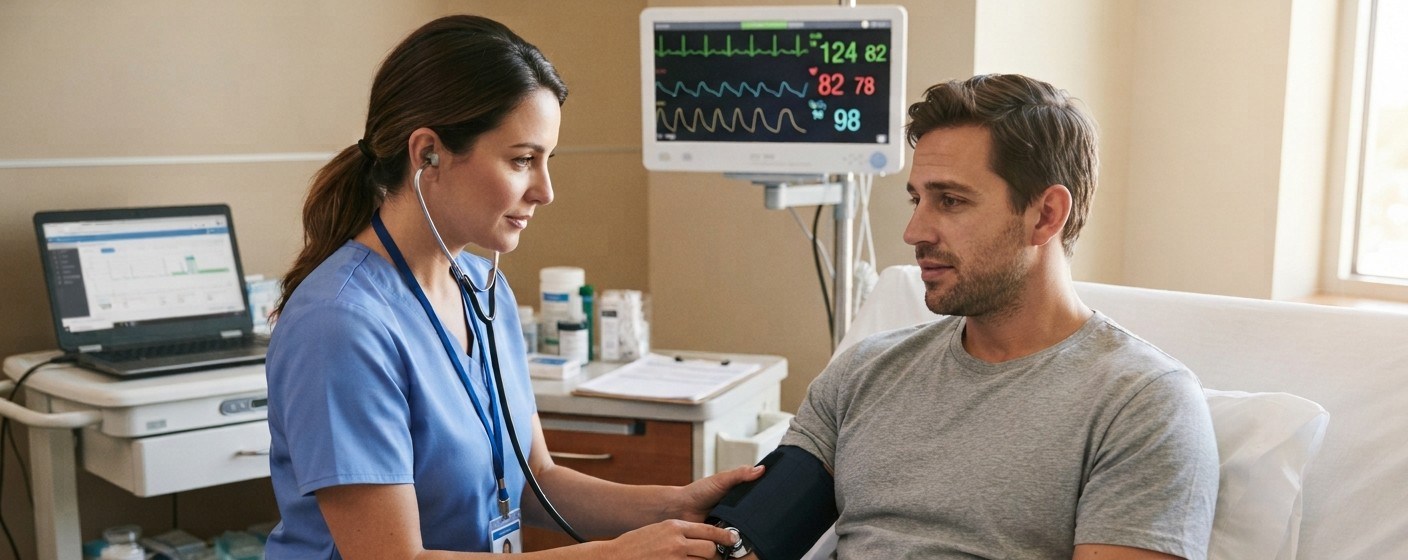
Medical teams keep track of alcohol detox by checking vital signs regularly and using a standard withdrawal scale like the CIWA-Ar. If scores go up or vital signs become unstable, it may mean more care is needed. Lower scores and steady vital signs usually show progress. Because alcohol withdrawal can be dangerous, it should always be supervised by medical professionals. That is why alcohol detoxification in Los Angeles is safest in a setting where staff can check symptoms often and act quickly when something changes.
Why Alcohol Detox Needs Monitoring
Alcohol withdrawal can lead to serious problems like seizures and delirium tremens (DTs), according to MedlinePlus. Because symptoms can change fast, regular monitoring is important.
Do not try to detox from alcohol at home. Call 911 right away for a seizure, severe confusion, or hallucinations.
The CIWA-Ar: How Withdrawal Severity Is Scored
The Clinical Institute Withdrawal Assessment for Alcohol, revised (CIWA-Ar), is a 10-question scale scored by a clinician. The highest possible score is 67. Staff use it repeatedly to see if withdrawal is getting better or worse over time.
The scale looks at symptoms like nausea, tremor, sweating, anxiety, agitation, sensory changes, headache, and orientation. Each facility may use different thresholds and treatment plans, so the examples below are just for reference.
|
Score Range |
Severity |
Typical Approach |
|
About 0 to 8 |
Mild |
Supportive care and monitoring |
|
About 9 to 15 |
Moderate |
More frequent checks and treatment according to protocol |
|
16 and above |
Severe |
Close monitoring for complications |
Vital Signs and Physical Checks
Alongside the CIWA-Ar, staff track:
-
Blood pressure
-
Heart rate
-
Temperature
-
Breathing
-
Hydration and nutrition
-
Lab work, when ordered
Staff usually check more often at the start and less often as symptoms improve.
In addition to these checks, staff may look at alertness, orientation, and any changes in behavior. They also review medication needs and ask about symptoms between formal checks. These observations help the care team understand how withdrawal is progressing. One reading alone does not show progress. Staff look at trends over time and consider the person’s overall health when deciding if care needs to change.
The Withdrawal Timeline and Danger Windows
The timing of withdrawal symptoms can vary. It depends on things like drinking habits, past withdrawal experiences, and overall health.
|
Time Since Last Drink |
Common Signs |
What Staff Watch For |
|
About 6 to 24 hours |
Anxiety, tremor, sweating, nausea, insomnia |
Rising scores and vital sign changes |
|
About 12 to 48 hours |
Stronger symptoms and possible seizures |
Seizure risk and hallucinations |
|
About 48 to 72 hours and after |
Possible delirium tremens in severe cases |
Confusion, fever and unstable vital signs |
Signs That Detox Is Progressing
-
Withdrawal scores are falling.
-
Blood pressure and heart rate are becoming more stable.
-
Sleep and eating improve.
-
Tremor and anxiety decrease.
-
Thinking becomes clearer.
-
Cravings become more manageable.
Staff check progress by looking at both physical and clinical signs, not just one number. Someone may still feel some anxiety, tiredness, or cravings even as they get better. Staff keep monitoring during this time because symptoms can go up and down before they finally improve.
When Monitoring Escalates
Staff increase care if they notice seizures, confusion, severe agitation, unstable vital signs, or other serious medical issues. If someone needs more help than the detox center can give, they may need to go to a hospital.
Staff may respond by checking more often, changing medications, or providing more medical support. The aim is to act quickly when things change, not wait until symptoms get worse.
How Monitoring Changes as Detox Ends
Staff usually check less often as symptoms improve. If someone stays stable without extra medication, it may mean they are ready for the next step. It’s a good idea to plan for this next stage while still in detox, as described in our post about readiness for treatment.
Clinical Review and Credentials
The credentials and facility details below have been verified against the client website.
-
Author: Dr. Narine Arutyounian, M.D., Medical Director. Clinical contribution by Ritsa Fistes, LMFT, Clinical Director.
-
DHCS license: Healthy Living Residential Program, License #190956AP, expiring May 1, 2027.
-
Accreditation: The client website states that the program is Joint Commission (JCAHO) accredited.
-
Address: 22512 Garzota Drive, Santa Clarita, CA 91350.
-
Areas served: The website lists the San Fernando Valley among the areas served, including communities such as Burbank and Glendale.
These details give a quick summary of the program’s clinical leadership, licenses, accreditations, and the areas it serves.
Medical Review Notice and Help Lines
Medically reviewed by Dr. Narine Arutyounian, M.D. on October 1, 2026. This information is educational and is not medical advice. Alcohol withdrawal can be an emergency. Call 911 for seizures or confusion.
-
988 Suicide and Crisis Lifeline: Call or text 988.
-
SAMHSA National Helpline: 1-800-662-4357.
-
LA County SAPC helpline: 1-844-804-7500.
These numbers have been verified against official government and service sources as of October 2026.
Begin Your Healing Journey Today
Regular checks and standard scoring help staff track withdrawal and catch problems early. With medical supervision, support can be adjusted as symptoms change. Healthy Living Residential Program offers 24/7 medical monitoring by doctors and trained staff. Call (661) 536-5562 to learn about medically supervised detox or to get a free, no-pressure assessment.
Frequently Asked Questions
What is the CIWA scale for alcohol withdrawal?
The CIWA-Ar is a 10-item scale scored by a clinician to rate alcohol withdrawal severity. Scores help guide how often staff check on a patient and what care is needed. Protocols differ between facilities.
How often are vital signs checked during alcohol detox?
Checks are generally more frequent early on and may become less frequent as symptoms settle.
How long does alcohol detox monitoring last?
Monitoring continues until symptoms are stable and the person is clinically ready for the next stage of care. The length varies from person to person.
Sources
-
MedlinePlus. Alcohol withdrawal. https://medlineplus.gov/ency/article/000764.htm
-
MedlinePlus. Delirium tremens. https://medlineplus.gov/ency/article/000766.htm
-
Substance Abuse and Mental Health Services Administration (SAMHSA). (2014). TIP 45: Detoxification and Substance Abuse Treatment. https://www.samhsa.gov/resource/dbhis/tip-45-detoxification-substance-abuse-treatment
-
American Society of Addiction Medicine (ASAM). The ASAM Criteria. https://www.asam.org/asam-criteria
-
National Institute on Alcohol Abuse and Alcoholism (NIAAA). Alcohol Withdrawal Syndrome. https://www.niaaa.nih.gov/
-
Substance Abuse and Mental Health Services Administration (SAMHSA). National Helpline. https://www.samhsa.gov/find-help/national-helpline
-
988 Suicide & Crisis Lifeline. https://988lifeline.org/