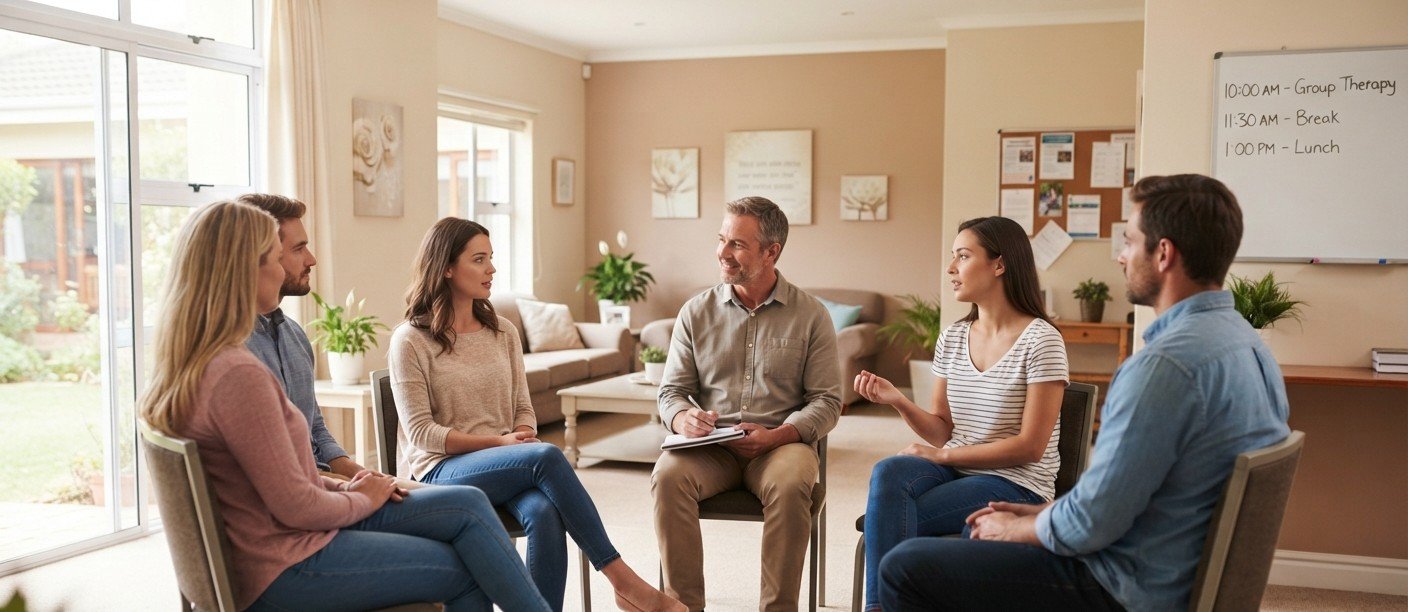
Residential treatment brings structure to your day, with set times for meals, therapy, group activities, health checks, and rest. As you move through treatment, your routine may change, starting with lighter days and gradually allowing more independence. Each program is different, so ask for a sample schedule. Knowing what to expect can ease fear, especially for people comparing drug treatment in Los Angeles.
Having a set routine can make it easier to adjust to residential care. Rather than figuring out what to do next, you will know when to eat, attend therapy, take medication, and rest. This steady schedule helps you focus on your recovery.
What Changes When You Enter Residential Drug Treatment?
Before treatment, daily life can feel unpredictable and often centers on substance use. In residential care, you follow a set schedule for waking up, meals, therapy sessions, and bedtime. Work, school, and most outside responsibilities are put on hold during treatment.
The first few days can feel unfamiliar as you get used to the new environment and what is expected of you. You may also be adjusting to sharing space with others, joining scheduled sessions, and following the program’s rules.
Each program has its own rules about phones and devices. Having a set routine means you make fewer decisions in the early weeks, which can help you avoid triggers. The schedule also gives you regular times for meals, treatment, rest, and connecting with your care team.
A Typical Weekday in Residential Treatment
Here is an example of a Monday schedule at Healthy Living Residential Program. Staff may adjust the times as needed.
|
Time |
Activity |
Why It Matters |
|
7:00 AM |
Breakfast |
Regular meals support a consistent daily routine |
|
8:00 AM |
Daily reflections |
Sets an intentional tone for the day |
|
9:00 AM |
Medication with a nurse |
Keeps medical care consistent |
|
10:00 to 11:30 AM |
Morning clinical group |
Builds core recovery skills |
|
11:30 AM to 1:00 PM |
Lunch and rest |
Offers a break and peer connection |
|
1:00 to 2:30 PM |
Afternoon group |
Adds skills work and education |
|
3:00 to 4:30 PM |
Second afternoon session |
Supports self-awareness and family dynamics |
|
5:00 to 6:00 PM |
Dinner |
Shared meals build community |
|
7:00 to 8:30 PM |
Outside AA or NA meeting |
Connects clients with peer support |
|
9:00 PM |
Evening medication |
Keeps care consistent |
|
10:00 to 10:30 PM |
Wrap-up |
Closes the day with reflection |
|
11:00 PM |
Lights out |
Protects time for sleep |
Individual therapy with your assigned therapist is scheduled around these main activities. This routine shows how residential care blends treatment with daily life.
How Your Routine Changes as Treatment Progresses
While each program is unique, many follow a similar pattern:
-
Early days: Assessment, adjustment, rest, and medication management. The schedule may be lighter if the person is still stabilizing.
-
Middle weeks: Fuller programming, family sessions, and life-skills work.
-
Later weeks: Discharge planning, step-down preparation, and sometimes more independence or privileges.
This progression is not just about keeping you busy. Over time, treatment shifts from helping you adjust to building new skills and getting ready for the next steps in your recovery.
Evenings, Weekends, and Free Time
Evenings might have meetings or reflection groups. Weekends are usually less busy but still have some structure. For example, this program offers a community outing on Saturdays and allows visitors on Sunday evenings.
During free time, you might exercise, write in a journal, make phone calls, or simply rest, depending on the program’s rules. This unstructured time helps you practice managing your day in healthy ways.
Staying in touch with family is also important. Scheduled calls and visits help you stay connected while keeping the boundaries that support your treatment.
Medication, Health Checks, and Contact With Family
If your treatment plan includes nursing checks or medication, these happen at set times. Phone calls and visits follow the program’s rules, and family contact is often scheduled so it does not interfere with therapy.
These routines help make your day feel more predictable. They also give you regular chances to talk with staff about any concerns, treatment needs, or changes in how you are feeling.
Clinical Review and Credentials
The credentials and facility details below have been verified against the client website.
-
Author: Dr. Narine Arutyounian, M.D., Medical Director. Clinical contribution by Ritsa Fistes, LMFT, Clinical Director.
-
DHCS license: Healthy Living Residential Program, License #190956AP, expiring May 1, 2027.
-
Accreditation: The client website states that the program is Joint Commission (JCAHO) accredited.
-
Address: 22512 Garzota Drive, Santa Clarita, CA 91350.
-
Areas served: The program serves the greater Los Angeles area, including the San Fernando Valley, Burbank, and Glendale.
These details show the program’s clinical leadership, licensing, accreditation, and the areas it serves.
Medical Review Notice and Help Lines
Medically reviewed by Dr. Narine Arutyounian, M.D., on October 1, 2026. This information is educational and is not medical advice.
-
988 Suicide and Crisis Lifeline: Call or text 988.
-
SAMHSA National Helpline: 1-800-662-4357.
-
LA County SAPC helpline: 1-844-804-7500.
Begin Your Healing Journey Today
Knowing what your daily schedule will look like can make residential care feel less overwhelming. If you are looking at different programs, ask how routines change over time, what the phone and visitation rules are, and how much individual and group therapy you will get. You can call (661) 536-5562 for a free, no-pressure assessment.
Frequently Asked Questions
What is the daily routine in residential drug treatment?
A typical day includes meals, group and individual therapy, health checks, skill-building sessions, and a set bedtime. Since each program is different, it’s a good idea to ask for a sample schedule.
Can I use my phone in residential drug rehab?
Each program has its own rules, and some limit phone use, especially at the start. At Healthy Living Residential Program, residents turn in their electronics at night. After the first five days, you can use your personal devices during set free time.
How many hours of therapy do you get each day in residential treatment?
The number of therapy hours depends on the program and your level of care. Group sessions often take up several parts of the day, and individual therapy is scheduled around them. Be sure to ask each program about their weekly therapy schedule.
Sources
-
Substance Abuse and Mental Health Services Administration (SAMHSA). (2014). TIP 45: Detoxification and Substance Abuse Treatment. https://www.samhsa.gov/resource/dbhis/tip-45-detoxification-substance-abuse-treatment
-
Substance Abuse and Mental Health Services Administration (SAMHSA). (2020). TIP 39: Substance Use Disorder Treatment and Family Therapy. https://www.samhsa.gov/resource/dbhis/tip-39-substance-use-disorder-treatment-family-therapy
-
National Institute on Drug Abuse (NIDA). Principles of Effective Drug Addiction Treatment. https://nida.nih.gov/publications/principles-drug-addiction-treatment-research-based-guide-third-edition/principles-effective-treatment
-
American Society of Addiction Medicine (ASAM). The ASAM Criteria. https://www.asam.org/asam-criteria
-
Substance Abuse and Mental Health Services Administration (SAMHSA). National Helpline. https://www.samhsa.gov/find-help/national-helpline
-
988 Suicide & Crisis Lifeline. https://988lifeline.org/