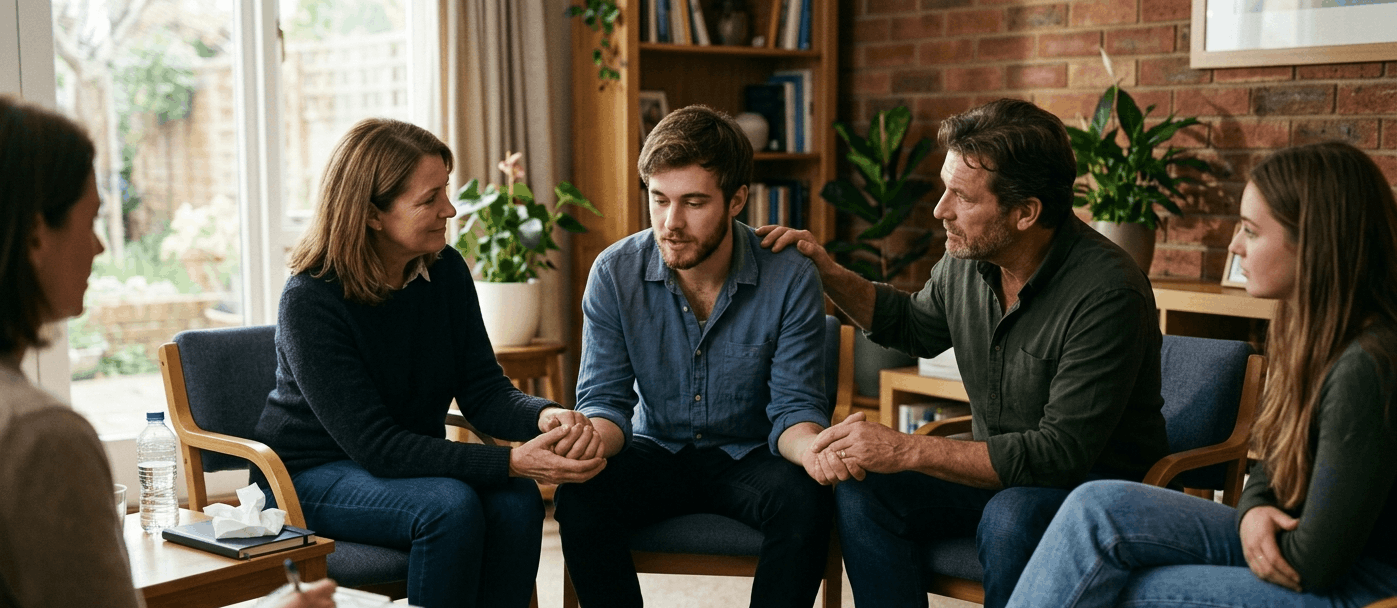
Addiction reaches past the person using it, and its weight lands on everyone in the household. Clinicians in the family-systems tradition treat it as a condition the whole family lives through together. That’s why many Los Angeles drug rehabilitation programs now include families in treatment. This matters, since about half of people in treatment leave before finishing, and finishing treatment is one of the best signs of lasting recovery.
How Addiction Affects the Entire Family System
Substance abuse can make someone unpredictable and affect their judgment, which changes how the whole family works together. The home environment plays a big role in recovery, so treatment programs take this into account.
Several patterns recur:
- Enabling and codependent patterns settle in and start to feel normal.
- Communication fails, and conflict rises through repeated cycles of use.
- Children absorb adult worries and step into caretaking early, a pattern called parentification.
- Partners and spouses carry isolation, grief, financial strain, and caretaking fatigue.
- Trust erodes across repeated cycles of relapse and recovery.
The Research Case for Family Involvement in Recovery
A solid body of research backs family involvement as a driver of better outcomes:
- A 2018 BMJ Open review linked it to better treatment entry, completion, and outcomes.
- NIDA backs family-based therapies like BSFT and FBT in its treatment principles.
- SAMHSA counts family and social support among the pillars of lasting recovery.
- Marlatt and Gordon tied about 75% of relapses to three situations: negative emotional states, interpersonal conflict, and social pressure. Two of the three are relational.
This proves that interpersonal conflict and the emotional climate at home can act as triggers, which is where family support does its steady work.
Types of Family Involvement Offered in Los Angeles Drug Rehabilitation Programs
Los Angeles drug rehabilitation programs open several doors for families to take part. Each route serves a distinct purpose within the wider recovery plan.
Family Therapy Sessions
A licensed therapist leads weekly or biweekly sessions that focus on communication, setting boundaries, and rebuilding trust. Sometimes the patient joins these sessions, while other times the family meets on their own to learn how to support recovery.
Family Education Programs
Educational programs help families understand addiction, withdrawal, relapse triggers, and codependency. This knowledge helps them support recovery at home without falling into enabling behaviors.
Multi-Family Group Workshops
Intensive workshops bring families together to learn and support each other. Hearing from others in similar situations helps everyone feel less alone and more willing to share.
Discharge Planning Meetings
Near the end of treatment, programs include families in discharge planning. These meetings discuss living arrangements, next steps in care, and what to expect for sober living.
The Phased Approach to Family Involvement
Family involvement usually happens in steps, starting slowly as the patient becomes more stable, both physically and emotionally. This process often begins with first contact and continues after discharge.
| Phase | What Happens in the Phase |
| Initial Contact | Introductory call between family and the clinical team that sets expectations |
| Psychoeducation | Family learns addiction science, withdrawal and how to support recovery |
| Therapy | Facilitated sessions that improve communication and rebuild trust |
| Post-Discharge Planning | Building a sober home, clear boundaries and ongoing support structures |
Setting Healthy Boundaries: What Family Members Need to Know
Support is most helpful when it is consistent and realistic over time. Healthy boundaries help families stay connected while allowing their loved one to take responsibility for their own recovery.
These can look something like:
- Letting natural consequences stand while keeping your love and connection obvious.
- Saving family news and crisis updates for after the early residential phase.
- Attending Al-Anon, Nar-Anon, or a family support group for your own footing.
- Expecting recovery to unfold over months and years and pacing yourself for it.
- Seeking your own therapy to work through grief, anger, or trauma tied to a loved one’s addiction.
A family is usually ready to help well when these points hold before discharge:
- You understand the basics of how addiction and withdrawal actually work.
- You have joined a support group such as Al-Anon or Nar-Anon.
- You have agreed on consistent household boundaries with everyone under one roof.
- You have arranged your own counseling or peer support.
- You have a substance-free home and a step-down plan ready for the return.
How Healthy Living Treatment Supports Families
Healthy Living Treatment includes family involvement in its residential program in Los Angeles. Family therapy sessions and visits help relatives stay connected during recovery. The clinical team keeps families updated, as long as the patient agrees, and helps them find their own support. Families also take part in discharge planning to make sure the home is ready when their loved one returns.
Conclusion
Family involvement is one of the most effective ways to help a loved one complete treatment and stay in recovery. Families can help by learning about addiction, setting clear boundaries, and staying accountable. It’s also important for families to take care of their own health. Recovery is a long process, so steady and informed support makes a real difference.
Frequently Asked Questions
When can family members first get involved in Los Angeles drug rehabilitation?
Family involvement usually starts after the patient has been stabilized and finished detox. The patient also needs to be mentally ready. Most programs use a step-by-step approach, starting with setting expectations and moving to deeper family work as treatment goes on.
What if my loved one is reluctant to involve family?
Family involvement is always optional, and the patient decides if and when to include family during treatment. Programs can still help relatives on their own and get them ready for discharge. This kind of support helps the whole family prepare for when their loved one returns. The most important thing is that the patient feels seen and supported.
How can families give support that truly helps recovery?
Helpful support comes from building a few good habits early on. Learning about addiction, agreeing on clear boundaries, and joining groups like Al-Anon or Nar-Anon are all important. A counselor can also help families learn how to communicate in ways that support recovery.
Does Healthy Living Treatment offer family therapy?
Family therapy sessions are included in the residential program at Healthy Living Treatment. The admissions team can explain how scheduling and participation would work for your family.
Sources
- Kourgiantakis, T., & Ashcroft, R. (2018). Family-focused practices in addictions: a scoping review protocol. BMJ Open, 8(1), e019433. https://doi.org/10.1136/bmjopen-2017-019433
- National Institute on Drug Abuse (NIDA). Principles of Drug Addiction Treatment: A Research-Based Guide (Third Edition). https://nida.nih.gov/publications/principles-drug-addiction-treatment-research-based-guide-third-edition
- Substance Abuse and Mental Health Services Administration (SAMHSA). Recovery and Recovery Support. https://www.samhsa.gov/find-help/recovery